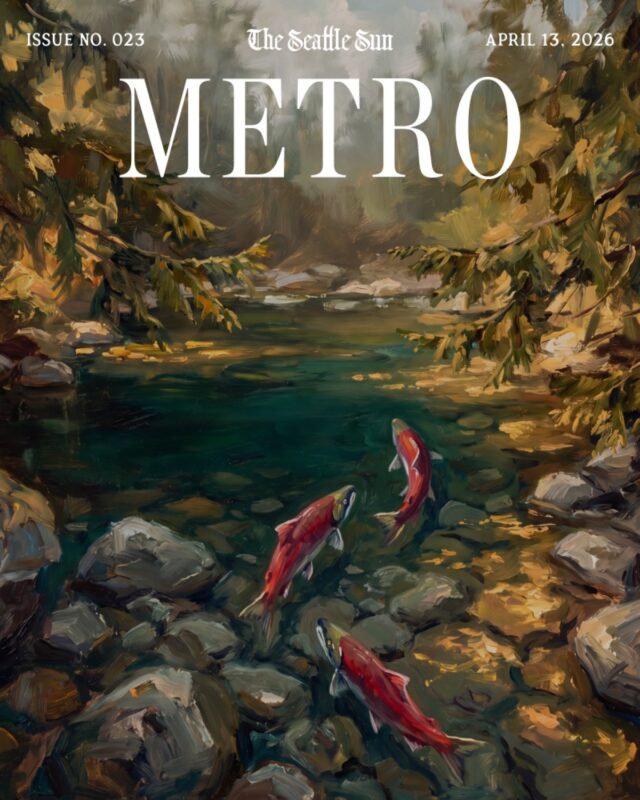
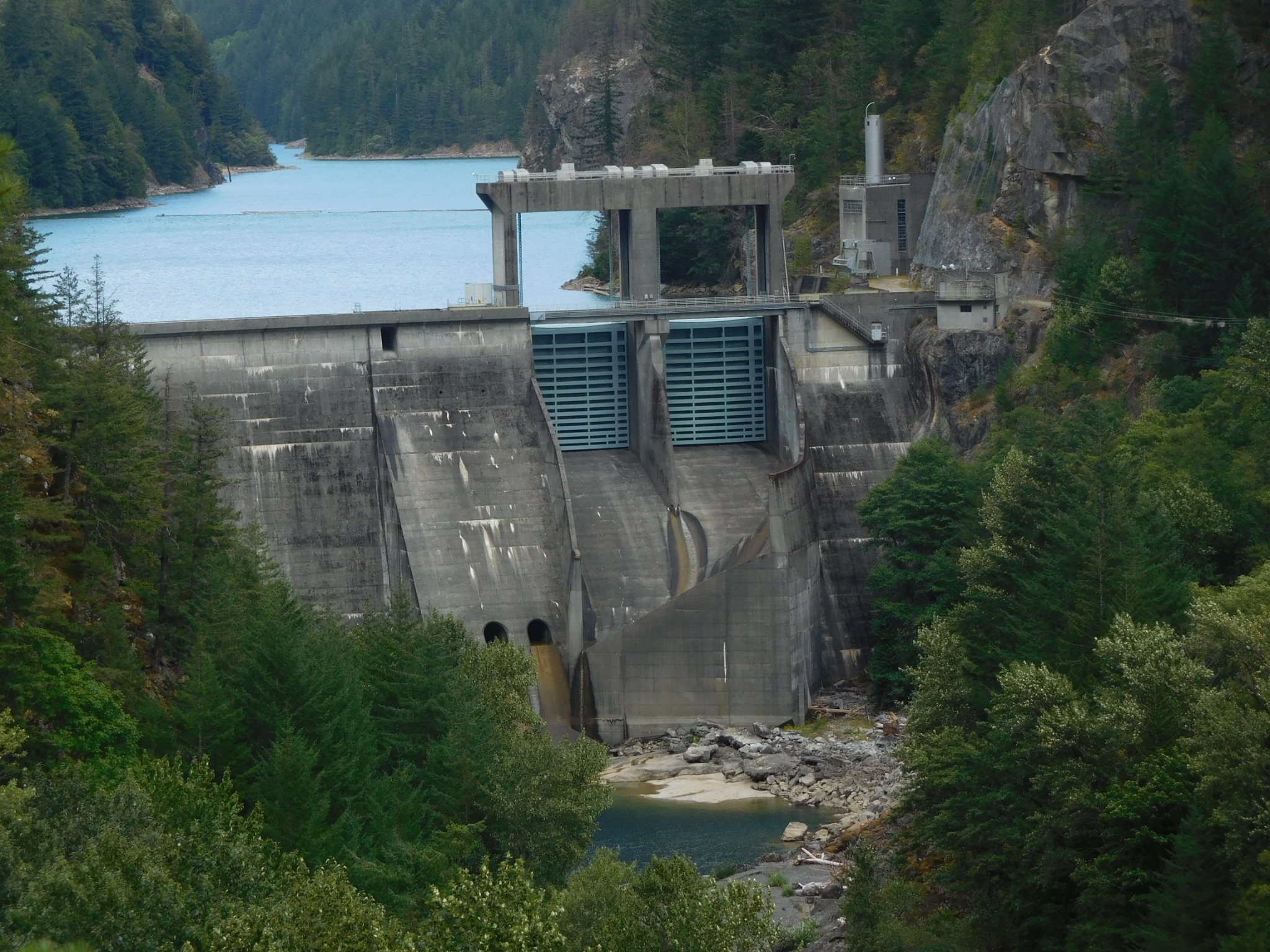

Seattle’s City Council voted 7-0 on April 7 to commit Seattle City Light to $979 million in salmon passage construction at three Skagit River dams that have blocked fish from 40 percent of the watershed for a century. The vote authorizes a broader $4 billion settlement with the treaty tribes of the Skagit basin; Mayor Katie Wilson has until May 12 to sign, triggering a federal filing toward a new 50-year operating license around 2030.
What the $979 Million Buys
The passage system has a proven local precedent. On the Baker River — a Skagit tributary — Puget Sound Energy’s 2004 relicensing built trap-and-haul after the sockeye run crashed to 99 returning adults in 1985. Adults are caught below the lower dam and trucked upstream; juveniles are collected at the reservoir and trucked down. By 2025 the Baker run had reached roughly 92,000 fish, a 900-fold recovery. City Light’s settlement builds the same system at all three Skagit dams, plus $200 million for habitat restoration — split roughly evenly between mainstem and estuary work — and $350 million in direct tribal compensation. Swinomish wildlife manager Tino Villaluz called the package “a lot of glamorous numbers in there that aren’t glamorous at all” — a reminder that trap-and-haul is a managed system, not a restored river.
Why It Took a Century
Gorge Dam came online in 1924 on the ancestral territory of the Upper Skagit; its waters inundated Daxʷálib, an Upper Skagit village. Ross Dam, completed in 1953, flooded what the tribe calls the Valley of the Spirits. The licenses of that era did not require fish passage or treat treaty rights as a constraint. “There’s over 100 years of the river dewatered that five generations of Upper Skagit had to endure,” said Scott Schuyler, the tribe’s policy representative. The legal ground shifted slowly: Judge George Boldt’s 1974 ruling affirmed treaty rights to half the harvestable salmon, NOAA listed Puget Sound Chinook as threatened in 1999, and in 2021 the Sauk-Suiattle filed a Rights-of-Nature suit arguing salmon had legal standing and Gorge Dam could not lawfully block their passage. Seattle settled that case by committing to fish passage at Gorge; the 2026 agreement extends the commitment to all three dams. At the April 7 hearing, Councilmember Debora Juarez said: “What public utilities did to rivers here verges on violence and obscene.”
Why the Dams Stay
The Skagit dams remain because their 839 megawatts of carbon-free hydropower — roughly 20 percent of Seattle’s electricity — cannot be removed without a replacement plan that does not exist. Skagit County diking districts declined to sign, citing concern that estuary funding would convert delta farmland to floodplain. The county signed only after Prosecuting Attorney Will Honea conditioned approval on City Light defunding the Skagit Environmental Endowment Commission, which he said had worked against fish passage.
What Happens Next
Wilson’s signature triggers City Light’s FERC filing and a $10 million early-action study this spring. FERC’s environmental review is expected to run several years; passage construction follows in the 2030s. City Light customers will see roughly 0.5 percent annual rate increases from 2027 through 2032. No date has been set for the first fish above the dams. Schuyler, who as recently as 2021 had called for Gorge Dam removal, said “the satisfaction will come when we see fish returning.”