Subscribe
  • Home
  • Metro Local News from the Pacific Northwest
  • About Mission, masthead, roadmap
  • Contact Tips, corrections, questions, technical support
  • Subscribe Get the latest in your inbox weekly
Metro Local News from the Pacific Northwest
Issue No. 023 April 13, 2026

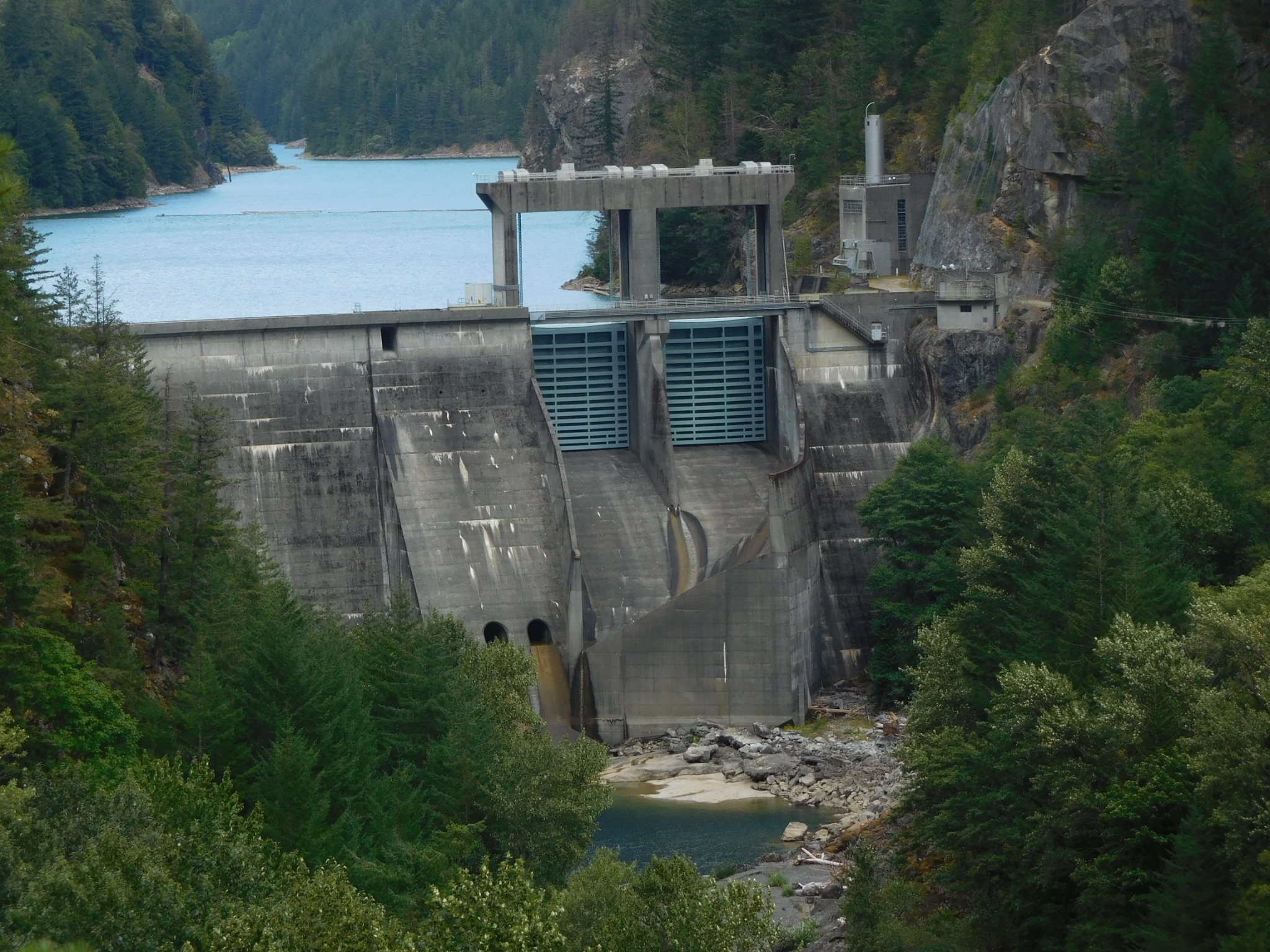
Photo: Gorge Dam on the Skagit River

Environment

Seattle Approves $979 Million Fish Passage Plan for Skagit River Dams

Seattle’s City Council voted 7-0 on April 7 to commit Seattle City Light to $979 million in salmon passage construction at three Skagit River dams that have blocked fish from 40 percent of the watershed for a century. The vote authorizes a broader $4 billion settlement with the treaty tribes of the Skagit basin; Mayor Katie Wilson has until May 12 to sign, triggering a federal filing toward a new 50-year operating license around 2030.

What the $979 Million Buys

The passage system has a proven local precedent. On the Baker River — a Skagit tributary — Puget Sound Energy’s 2004 relicensing built trap-and-haul after the sockeye run crashed to 99 returning adults in 1985. Adults are caught below the lower dam and trucked upstream; juveniles are collected at the reservoir and trucked down. By 2025 the Baker run had reached roughly 92,000 fish, a 900-fold recovery. City Light’s settlement builds the same system at all three Skagit dams, plus $200 million for habitat restoration — split roughly evenly between mainstem and estuary work — and $350 million in direct tribal compensation. Swinomish wildlife manager Tino Villaluz called the package “a lot of glamorous numbers in there that aren’t glamorous at all” — a reminder that trap-and-haul is a managed system, not a restored river.

Why It Took a Century

Gorge Dam came online in 1924 on the ancestral territory of the Upper Skagit; its waters inundated Daxʷálib, an Upper Skagit village. Ross Dam, completed in 1953, flooded what the tribe calls the Valley of the Spirits. The licenses of that era did not require fish passage or treat treaty rights as a constraint. “There’s over 100 years of the river dewatered that five generations of Upper Skagit had to endure,” said Scott Schuyler, the tribe’s policy representative. The legal ground shifted slowly: Judge George Boldt’s 1974 ruling affirmed treaty rights to half the harvestable salmon, NOAA listed Puget Sound Chinook as threatened in 1999, and in 2021 the Sauk-Suiattle filed a Rights-of-Nature suit arguing salmon had legal standing and Gorge Dam could not lawfully block their passage. Seattle settled that case by committing to fish passage at Gorge; the 2026 agreement extends the commitment to all three dams. At the April 7 hearing, Councilmember Debora Juarez said: “What public utilities did to rivers here verges on violence and obscene.”

Why the Dams Stay

The Skagit dams remain because their 839 megawatts of carbon-free hydropower — roughly 20 percent of Seattle’s electricity — cannot be removed without a replacement plan that does not exist. Skagit County diking districts declined to sign, citing concern that estuary funding would convert delta farmland to floodplain. The county signed only after Prosecuting Attorney Will Honea conditioned approval on City Light defunding the Skagit Environmental Endowment Commission, which he said had worked against fish passage.

What Happens Next

Wilson’s signature triggers City Light’s FERC filing and a $10 million early-action study this spring. FERC’s environmental review is expected to run several years; passage construction follows in the 2030s. City Light customers will see roughly 0.5 percent annual rate increases from 2027 through 2032. No date has been set for the first fish above the dams. Schuyler, who as recently as 2021 had called for Gorge Dam removal, said “the satisfaction will come when we see fish returning.”

Subscribe to Metro

Local News from the Pacific Northwest. Get it in your inbox.

    Headlines

    Ferguson declares fourth consecutive statewide drought —

    Snowpack ran 50–70% below normal across most Washington basins this winter, prompting warnings of reduced river flows through summer.

    Water

    Forest Service closes two Washington research stations ahead of fire season —

    Part of 57 closures nationwide; forecasters warn of severe fire conditions in eastern Washington by June.

    Wildfires

    Seattle library levy grows to $480M as council committee adds amendments —

    Up from $410M, adding extended hours and a South Park branch; full council votes April 14.

    City of Seattle

    Seattle Fire’s Health One alternative response unit now operates seven days a week —

    The 2026 city budget funds weekend coverage 9 a.m.–7 p.m. for the specialized team of firefighters, HSD caseworkers, and a Harborview nurse practitioner, which responded to 2,474 non-emergency 911 calls last year.

    Public Safety

    Seattle City Attorney creates first full-time wage theft enforcement position —

    Erika Evans announced the role citing state data showing $300 million in wages go unpaid in Washington annually.

    Labor Market

    Four Eastern Washington sheriffs sue over new law letting the state unseat elected sheriffs —

    Spokane, Pend Oreille, Stevens, and Ferry county sheriffs argue Senate Bill 5974, signed by Ferguson on April 1, unconstitutionally transfers voter authority to a governor-appointed commission empowered to decertify sitting sheriffs.

    Criminal Justice

    Jim Whittaker, first American to summit Everest, dies at 97 —

    The West Seattle native summited in 1963 and later served as REI's first full-time employee and chief executive.

    Outdoors & Recreation

    U.S.–Iran peace talks collapse in Islamabad after 21-hour marathon —

    The first face-to-face U.S.–Iran talks since 2015 ended Sunday with no deal, and Trump ordered a Navy blockade of the Strait of Hormuz. It came five days after the President threatened "a whole civilization will die tonight."

    Iran War
    Sound Transit

    Sound Transit Launches Survey on Closing $34.5 Billion Gap as ST3 Projects Face Cuts

    Sound Transit launched a public survey on April 3 asking residents across the three-county taxing district how to close a $34.5 billion funding shortfall — one that puts Ballard and West Seattle light rail extensions approved by voters in 2016 at risk of indefinite deferral or cancellation.

    The Three Approaches

    Staff presented three approaches at a March 18 board retreat in Tacoma. Each closes roughly the full gap through a different mix of truncations and cancellations.

    Approach 1 builds West Seattle to Alaska Junction and cancels the Issaquah-Kirkland Eastside extension entirely. Approach 2 — formally named “Build Issaquah, Cancel West Seattle” — cancels the West Seattle extension altogether while preserving the Eastside line. Approach 3 truncates every major project: Ballard to Seattle Center, West Seattle to a stub at Delridge, and Tacoma Dome Link to Fife rather than the Dome itself.

    All three scenarios shorten Ballard Link before it reaches its voter-approved terminus. The cost growth explains why: the Ballard extension was originally estimated at $11.9 billion and is now projected at $20.1 to $22.6 billion. West Seattle Link grew from $4.2 billion to $7.0 to $7.9 billion. Ballard carries the strongest ridership case for preservation — 90,000 to 173,000 projected daily riders, highest of any ST3 project and more than triple the 2 Line’s opening figures.

    Sound Transit CEO Dow Constantine told an overflow crowd at a West Seattle forum on April 1: “We will get to West Seattle.” The board has signaled it expects to mix elements from all three approaches rather than adopt any single scenario wholesale.

    Voices and What’s Next

    Seattle Councilmember Dan Strauss, whose Ballard district supported ST3 at nearly 90 percent in 2016, called the Ballard extension “the most riders of any project in Sound Transit history” and said any plan short of full Ballard service is “unacceptable.” Mayor Katie Wilson said she expects “shovels in the ground this year” on West Seattle. A Save Ballard Rail march across the Ballard Bridge is scheduled for April 19.

    Sound Transit has not publicly addressed whether it can legally truncate voter-approved ST3 projects without a new ballot measure. In the agency’s own terminology, “defer” means a project is nominally retained in the program but receives no allocated funding until a new source materializes — in practice, an indefinite pause.

    Survey responses will be synthesized for the Sound Transit Board before its May 28 meeting. An updated ST3 system plan is expected in June 2026.

    Taxes

    Opponents File Constitutional Challenge to Washington’s Income Tax

    Opponents of Washington’s new 9.9 percent income tax filed a constitutional challenge in Klickitat County Superior Court on Thursday — ten days after Governor Ferguson signed the measure. The lead sponsor of the bill called the lawsuit expected and part of the plan.

    The Filing

    The Citizen Action Defense Fund organized the challenge, retaining former Attorney General Rob McKenna and former state Supreme Court Justice Phil Talmadge as co-counsel alongside the fund’s executive director, Jackson Maynard. Lead plaintiffs Benjamin and Laura Petter own a Chelan County construction business subject to the tax. Additional plaintiffs include a Klickitat County farmer, a Kent trucking company owner, and three industry groups. The Washington Department of Revenue and its director John Ryser are named as defendants.

    The Klickitat County venue — a heavily Republican jurisdiction in south-central Washington — positions the case to work upward through the courts. Trial courts are bound by existing state Supreme Court precedent, so a favorable ruling at the superior court level is the expected first step before the case reaches the Supreme Court, likely in early 2027.

    The Legal Question

    The lawsuit argues that income constitutes property under Article VII of the state constitution, which requires property taxes to be applied uniformly at no more than 1 percent. At 9.9 percent on incomes above $1 million, the plaintiffs contend the law is plainly unconstitutional. The controlling precedent is Culliton v. Chase (1933), a 5-4 ruling that McKenna and Talmadge previously invoked to defeat Seattle’s 2017 municipal income tax. Talmadge said the legislature “has to enact this kind of change in the law by a constitutional amendment.”

    The state will contest that framing. Attorney General Nick Brown’s office said it “will be defending the constitutionality of this law in court and expect to prevail.” The state will cite Quinn v. Washington (2023), in which the state Supreme Court upheld the capital gains tax 7-2 as an excise tax. The millionaires tax is written explicitly as a tax on “the receipt of Washington taxable income,” which gives plaintiffs less room to argue around the 1933 precedent.

    Senate sponsor Sen. Jamie Pedersen described the challenge as “expected and welcomed,” saying that obtaining judicial review of the Culliton precedent was among the bill’s strategic purposes.

    What Comes Next

    The Washington Supreme Court is expected to take direct review from the superior court and hear oral arguments in early 2027. Because the tax does not take effect until January 1, 2028, with first payments due in spring 2029, there is no urgency for a preliminary injunction. A superior court ruling is expected this summer.

    Five of nine Washington Supreme Court seats are on the November 2026 ballot, meaning the court’s composition could shift before oral argument. Let’s Go Washington, whose referendum petition was blocked in March by the bill’s necessity clause, is pursuing a parallel initiative track requiring roughly 340,000 signatures by June 10.

    By the Numbers

    86%

    Seattle Police Department's homicide clearance rate over the past year

    SPD solved 86% of homicide cases in the past 12 months, up from 57% the prior year and well above the national average of roughly 54%. Overall crime in Seattle fell 18% over the same period.

    $5.62

    Seattle metro regular gas price, as of April 12

    Seattle drivers are paying $5.62 per gallon — $1.49 above the national average of $4.13. Statewide, Washington averages $5.39, just 17 cents shy of the all-time state record of $5.56 set in June 2022.

    3.3%

    U.S. year-over-year inflation rate, March reading

    Consumer prices jumped 0.9% in March — the biggest monthly increase since June 2022 — pushing year-over-year inflation to 3.3%. A 21.2% gasoline spike drove nearly three-quarters of the move.

    Around Town

    Sand Point

    After a 90-day pilot that produced a double-digit reduction in reported crimes, Magnuson Park now has three permanently assigned Neighborhood Resource Officers walking and biking its grounds daily. SPD Chief Shon Barnes launched the program on April 8, citing the park’s size — second largest in the city — and the hundreds of low-income residents living at Mercy Housing and Solid Ground on the property. Barnes said SPD is looking to expand the model citywide.

    Fremont

    Paseo Restaurant & Tiki Bar (4225 Fremont Ave N), the neighborhood’s beloved Caribbean sandwich institution, is asking the community for help after discovering $42,000 in damage from tree roots that destroyed pipes beneath the building. Owners have launched a fundraising campaign. Paseo has been a Fremont fixture for decades, known for its roast pork sandwiches and lines that once stretched down the block.

    Madison Valley

    The Seattle Japanese Garden — a 3.5-acre lakeside sanctuary in the Washington Park Arboretum first built in 1960 by master designer Juki Iida — will temporarily close this summer for a $2.8 million restoration of its original stone retaining wall. The wall, now cracking after more than 60 years, will be reinforced for long-term stability and accessibility. City officials anticipate reopening before peak fall visitation. The garden is located at 1075 Lake Washington Blvd E.

    Downtown

    Barnes & Noble returns to downtown Seattle on May 6 at 520 Pike Street — the corner of Pike and 6th Avenue, in the former North Face space inside a 29-story Tishman Speyer tower. The 17,538-square-foot store, secured on a 10-year lease, is the largest downtown retail signing since 2020. A ribbon-cutting on April 29 at 9:00 a.m. will feature fantasy authors Robin Hobb, Terry Brooks, and Shawn Speakman. B&N closed its 22-year Pacific Place location in January 2020; its return, four blocks from Pike Place Market and roughly four blocks from Amazon’s Denny Triangle headquarters, arrives under CEO James Daunt’s indie-bookstore playbook that has added roughly 60 stores a year nationwide.

    Photos

    Earthset photograph by Artemis II crew, April 6 2026
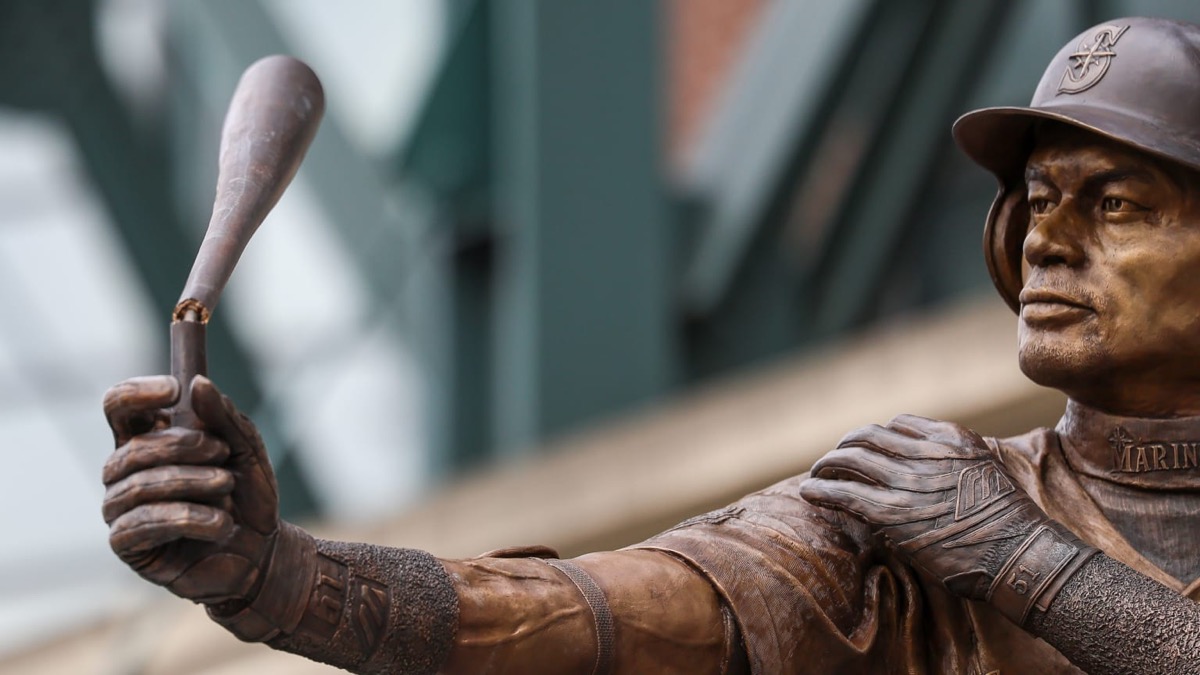
    Ichiro Suzuki statue unveiled at T-Mobile Park, April 10 2026
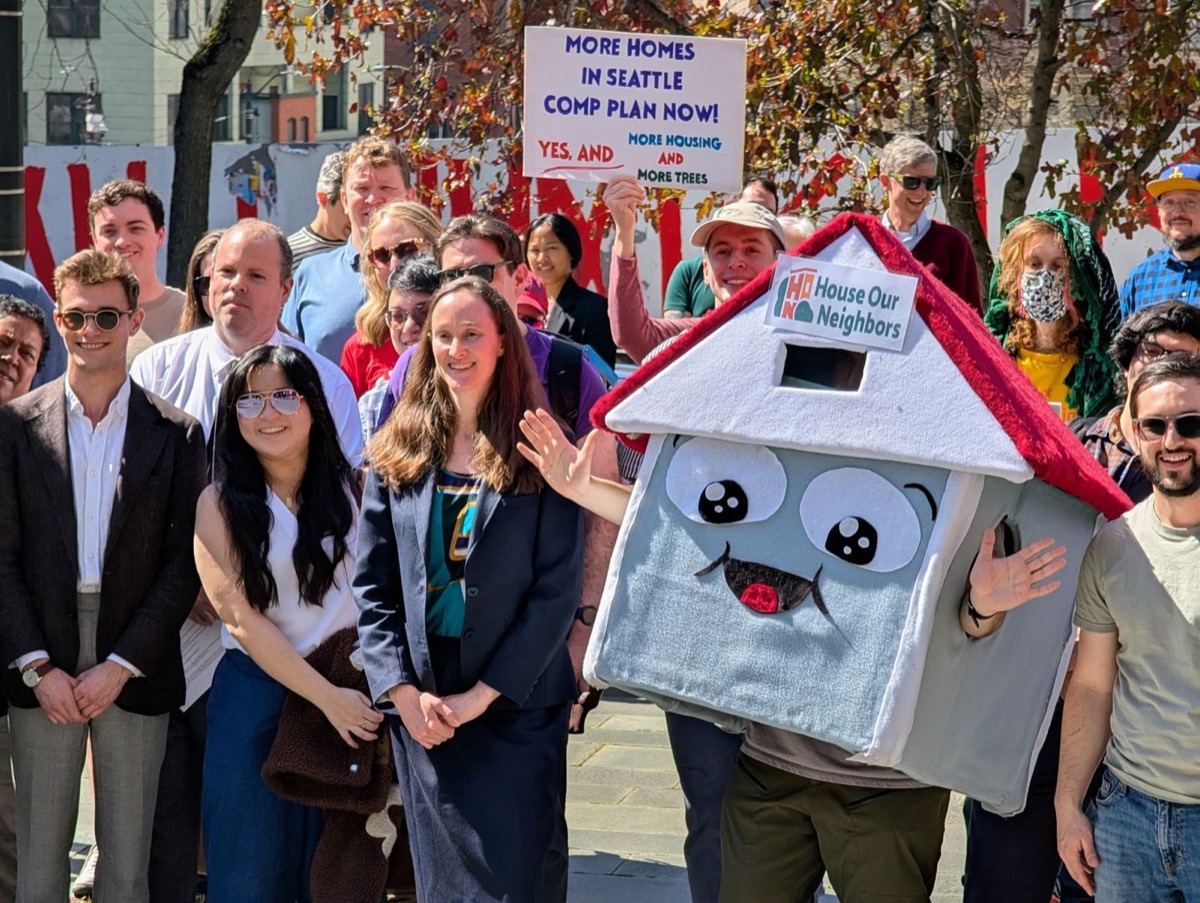
    Housing advocates rally at Seattle City Hall, April 8 2026
    FIFA World Cup trophy at Victory Hall, Seattle, April 6 2026
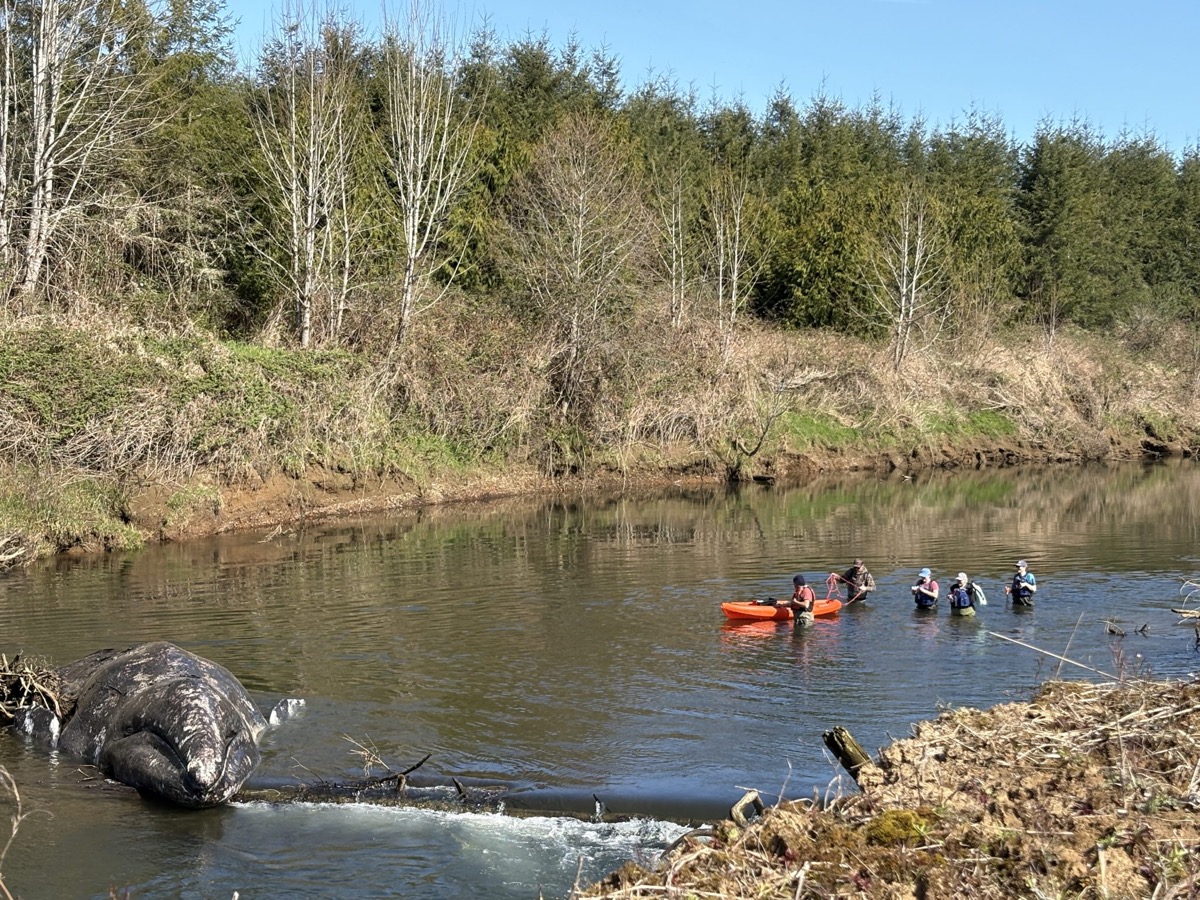
    Gray whale on Willapa River bank, April 6 2026

    On the Web

    Where Mail Voting Began, Worries Spread Over Trump's Attacks nytimes.com

    Drive for more housing sparks rare bipartisanship in statehouses stateline.org

    Ichiro Statue Unveiled with Broken Bat by Seattle Mariners in Ceremony That Went Foul nbcnews.com

    Latest ICE data shows surge in immigration arrests in WA washingtonstatestandard.com

    What Medicaid Cuts Mean For American Hospitals npr.org

    Artemis II breaks Apollo 13's distance record with daring moon flyby that included a solar eclipse apnews.com

    Quoted

    In a perfect world, we wouldn’t dam our rivers.

    Scott Schuyler, Upper Skagit Indian Tribe policy representative

    Schuyler made the remark after the tribe accepted a $4 billion settlement to relicense four Skagit River dams — a deal that secures environmental protections and tribal benefits while leaving the dams in place.

    ← Previous
    Issue No. 022 April 6, 2026

    © Metropoltica 2026. All rights reserved.
    Bring back the SuperSonics.

    UPC Code