
Audit of Homelessness Authority Triggers Dissolution Push
A forensic audit found KCRHA cannot account for $13 million and operates with a $44.7 million negative cash position.

April 27, 2026
A forensic audit released Wednesday found the King County Regional Homelessness Authority cannot account for $13 million in public funds and operates with a $44.7 million negative cash position, with no basic internal accounting controls. By Thursday, Seattle Councilmember Maritza Rivera and King County Councilmember Rod Dembowski had filed companion resolutions to formally dissolve the agency. Mayor Katie Wilson said “all options are on the table.” The KCRHA board met Friday to begin a corrective response. The agency has until May 23 to deliver a written remediation plan to the city and county; dissolution itself, if approved, would take up to a year.
What the Audit Found
The audit, commissioned jointly by the city and county, examined six fiscal years of KCRHA records. It identified roughly $12.26 million in expenditures the agency cannot match to source documentation, a $44.7 million cumulative cash deficit, and the absence of basic internal controls — segregation of duties, transaction-level review, vendor verification — that would normally catch errors before they accumulated. The agency’s funding model, which routes city, county, state, and federal dollars through the same accounts without categorical separation, was described as structurally vulnerable to losing track of expenses. “The supporting information isn’t there,” auditors told the KCRHA board on Friday, adding that tracing the missing $13 million will be difficult.
What KCRHA Was Built to Do
KCRHA was created in 2019 as a regional consolidation experiment: a single authority absorbing the city and county’s separate homelessness response systems, with an equity-centered mandate to give people closest to the problem decision-making power over services. Founding CEO Marc Dones resigned in 2023, two interim leaders followed, and Kelly Kinnison was named permanent CEO in 2024. The agency has faced chronic budget shortfalls throughout. Earlier this month, before the audit’s release, the City Council passed a shelter acceleration plan that committed $5 million toward 1,000 new shelter units by year-end and explicitly routed the work outside KCRHA. The audit confirmed an institutional judgment the administration had already made. The question on the table is not whether to address homelessness regionally — it is whether the existing agency is capable of delivering on its mandate.
The Dissolution Resolutions
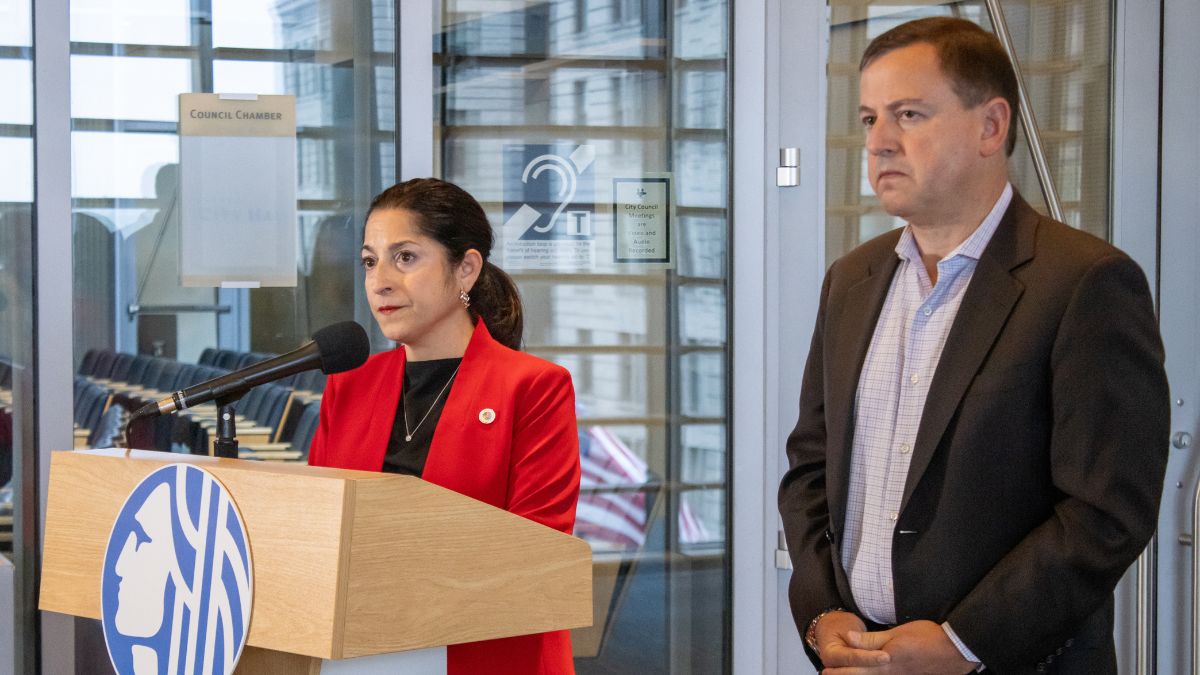
Rivera and Dembowski announced their companion resolutions Thursday morning at a joint press conference. Council President Bob Kettle called the audit’s findings “egregious” and said it was time for “a different pathway” on the city’s investment in the agency. Mayor Wilson’s office stated that all structural options remain open, including direct city-county takeover, a restructured regional model with stronger oversight, or full dissolution. The KCRHA board, made up of elected officials from across the region, met Friday to discuss the audit and authorized immediate spending controls. The agency’s leadership has not indicated whether it will contest dissolution or focus on the May 23 corrective action plan.
What Happens to Services and What’s Next
Outreach contracts, shelter operations, and food programs continue regardless of the dissolution timeline. If the council resolutions advance, formal dissolution would take up to a year, during which KCRHA would continue to operate under tightened controls while the city and county prepare to absorb the work directly or through a restructured successor. The accountability investigation will outlast the agency itself: tracing the $13 million in unaccounted-for expenditures is expected to take months at minimum, and the financial record will be examined by the state auditor and likely external investigators for years to come.