

Three companies — Prologis, Equinix, and Sabey — are seeking Seattle City Light approval to build four large data centers with a combined peak demand of 369 megawatts, roughly one-third of the city’s average daily power use. Mayor Katie Wilson said Friday the city has not authorized any new facilities and is weighing a moratorium after more than 54,000 residents emailed City Council to support a pause. No permits have been filed; the four projects remain in a “cluster study” phase, an engineering review of whether the grid can deliver the requested load. At full capacity, the facilities would consume nearly ten times as much power as Seattle’s roughly 30 existing data centers combined.
What Seattle’s Data Centers Actually Look Like
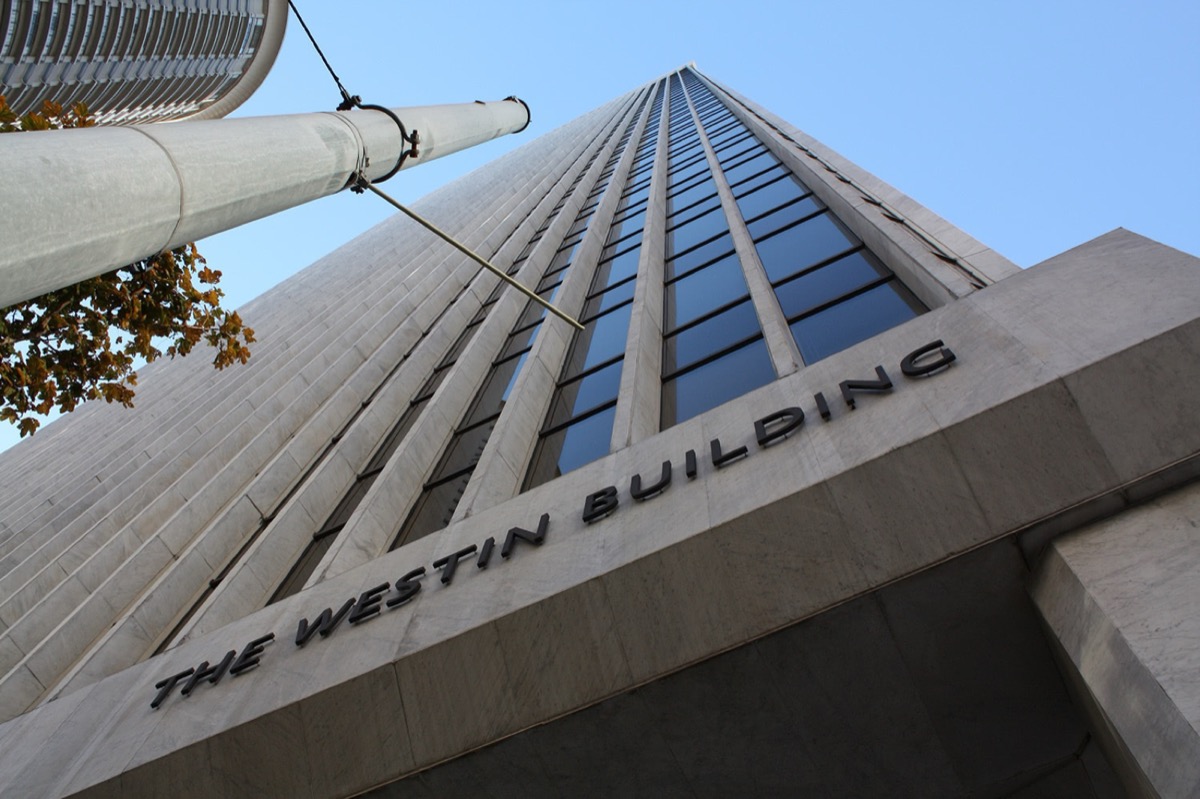
The popular picture — a windowless warehouse on a suburban campus — is not what Seattle has. The city’s existing facilities are overwhelmingly small colocation operations inside downtown office buildings. The Westin Building at 2001 6th Avenue is the region’s primary carrier hotel: a 34-story tower hosting more than 200 telecom and internet providers, with Equinix SE2, DataBank SEA1, Digital Realty, and Colocation Northwest all operating racks across multiple floors. TierPoint runs space at Fisher Plaza in Lower Queen Anne; H5 Data Centers occupies 1000 Denny Way; phoenixNAP operates out of 2020 5th Avenue. These are racks and cages — footprints measured in tens of thousands of square feet, each drawing a few megawatts. The closest hyperscale campus sits just outside city limits: Sabey’s Intergate.Seattle in Tukwila spans more than a million square feet and about 54 megawatts — less than a sixth of what the four proposed Seattle facilities would draw together.
Where the Four Proposed Centers Would Go
City Light has declined to name addresses, citing nondisclosure agreements, but says all three applicants are looking at the “southernmost part” of its territory — the Duwamish industrial corridor through SoDo, Georgetown, and South Park, where heavy-industrial zoning, large parcels, and substation proximity make siting feasible. The applicants match that geography. Prologis is Seattle’s largest industrial property owner, with 165 buildings and 25 million square feet in the metro area; its Georgetown Crossroads facility at 6050 E. Marginal Way S. is a 590,000-square-foot three-story warehouse — the multistory urban-industrial format that translates readily to a dense-urban data center. Sabey already runs the Tukwila hyperscale campus and has decades of City Light experience. Equinix, a downtown colocation operator for more than twenty years, would be scaling up into an industrial format for the first time in Seattle.
Rate Pressure and the New Large-Load Policy
Seattle City Light customers are already absorbing a 5.4 percent rate increase in 2026 — about $4 more per month for a standard residential customer — with further increases projected in the years ahead. The utility faces billions in deferred infrastructure costs, including aging cable replacement and a Skagit River hydropower license renewal, and is absorbing rising load from new housing, EV adoption, and building electrification. Opponents argue adding 370 megawatts of industrial demand would worsen the squeeze on households. City Light is rewriting its contract terms: under the draft policy, any approved data center would have to secure its own power supply outside the city’s existing grid allocation and pay for all infrastructure upgrades at no cost to other ratepayers. “This cannot go back to the ratepayer,” said City Light executive Andy Strong. The revised contracts go to the mayor’s office within weeks.
What Happens Next
Council members Alexis Mercedes Rinck and Eddie Lin were independently exploring a moratorium before Wilson’s statement; none has yet been introduced. The mayor and Council will decide whether the new large-load contracts provide sufficient protection, or whether a formal moratorium ordinance is needed. Because no permit applications have been filed, any moratorium would halt proposals still in pre-application — a narrow but meaningful window.