Subscribe
  • Home
  • Metro Local News from the Pacific Northwest
  • About Mission, masthead, roadmap
  • Contact Tips, corrections, questions, technical support
  • Subscribe Get the latest in your inbox weekly
Metro Local News from the Pacific Northwest
Issue No. 025 April 27, 2026

Photo: Seattle City Council

Homelessness

Audit of Homelessness Authority Triggers Dissolution Push

A forensic audit found KCRHA cannot account for $13 million and operates with a $44.7 million negative cash position.

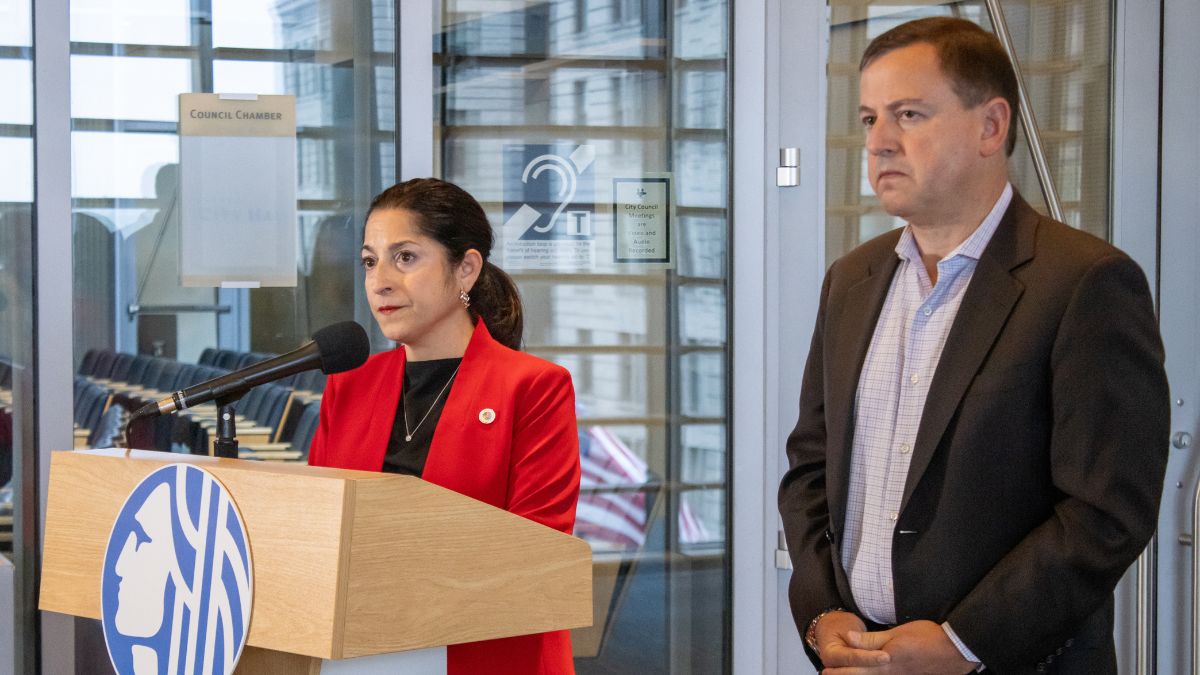
A forensic audit released Wednesday found the King County Regional Homelessness Authority cannot account for $13 million in public funds and operates with a $44.7 million negative cash position, with no basic internal accounting controls. By Thursday, Seattle Councilmember Maritza Rivera and King County Councilmember Rod Dembowski had filed companion resolutions to formally dissolve the agency. Mayor Katie Wilson said “all options are on the table.” The KCRHA board met Friday to begin a corrective response. The agency has until May 23 to deliver a written remediation plan to the city and county; dissolution itself, if approved, would take up to a year.

What the Audit Found

The audit, commissioned jointly by the city and county, examined six fiscal years of KCRHA records. It identified roughly $12.26 million in expenditures the agency cannot match to source documentation, a $44.7 million cumulative cash deficit, and the absence of basic internal controls — segregation of duties, transaction-level review, vendor verification — that would normally catch errors before they accumulated. The agency’s funding model, which routes city, county, state, and federal dollars through the same accounts without categorical separation, was described as structurally vulnerable to losing track of expenses. “The supporting information isn’t there,” auditors told the KCRHA board on Friday, adding that tracing the missing $13 million will be difficult.

What KCRHA Was Built to Do

KCRHA was created in 2019 as a regional consolidation experiment: a single authority absorbing the city and county’s separate homelessness response systems, with an equity-centered mandate to give people closest to the problem decision-making power over services. Founding CEO Marc Dones resigned in 2023, two interim leaders followed, and Kelly Kinnison was named permanent CEO in 2024. The agency has faced chronic budget shortfalls throughout. Earlier this month, before the audit’s release, the City Council passed a shelter acceleration plan that committed $5 million toward 1,000 new shelter units by year-end and explicitly routed the work outside KCRHA. The audit confirmed an institutional judgment the administration had already made. The question on the table is not whether to address homelessness regionally — it is whether the existing agency is capable of delivering on its mandate.

The Dissolution Resolutions

Rivera and Dembowski announced their companion resolutions Thursday morning at a joint press conference. Council President Bob Kettle called the audit’s findings “egregious” and said it was time for “a different pathway” on the city’s investment in the agency. Mayor Wilson’s office stated that all structural options remain open, including direct city-county takeover, a restructured regional model with stronger oversight, or full dissolution. The KCRHA board, made up of elected officials from across the region, met Friday to discuss the audit and authorized immediate spending controls. The agency’s leadership has not indicated whether it will contest dissolution or focus on the May 23 corrective action plan.

What Happens to Services and What’s Next

Outreach contracts, shelter operations, and food programs continue regardless of the dissolution timeline. If the council resolutions advance, formal dissolution would take up to a year, during which KCRHA would continue to operate under tightened controls while the city and county prepare to absorb the work directly or through a restructured successor. The accountability investigation will outlast the agency itself: tracing the $13 million in unaccounted-for expenditures is expected to take months at minimum, and the financial record will be examined by the state auditor and likely external investigators for years to come.

Subscribe to Metro

Local News from the Pacific Northwest. Get it in your inbox.

    Headlines

    FEMA denies Washington $36.6M in flood mitigation funding —

    The Trump administration rejected the state's Hazard Mitigation Grant Program application — the prevention funding that would finance projects like Mount Vernon's flood wall — with no explanation beyond "not warranted"; Washington has 30 days to appeal the denial.

    Federal Government

    Microsoft offers voluntary buyouts to up to 7% of US workforce —

    The company is offering severance packages to employees at the senior director level or below whose age plus years of service equals 70 or higher — a formula that targets the pre-AI cohort.

    Microsoft

    Businesses can now apply for tariff refunds after Supreme Court ruling —

    U.S. Customs and Border Protection opened an online claims portal Monday for importers to reclaim duties paid under tariffs the Court struck down in February as an unconstitutional use of presidential power; the national refund pool totals $166 billion, with CBP projecting 60-90 days to process approved claims.

    Trade

    DOJ moves medical cannabis to Schedule III —

    The Justice Department's order lifts the federal tax burden under Section 280E for state-licensed medical dispensaries; Washington's 302 stores with medical endorsements stand to benefit, but the state's larger adult-use market remains Schedule I until a separate DEA hearing begins June 29.

    Criminal Justice

    Iran’s Revolutionary Guard seizes two ships in Strait of Hormuz —

    Iranian forces fired on three container ships Wednesday and seized two. That same day President Trump extended a ceasefire in the two-month-old war. Brent crude spiked to nearly $100 per barrel — more than 35% above pre-war levels — compounding fuel costs across the region's airlines, freight, and households.

    Iran War

    Alaska Air posts $193M Q1 loss and warns fares won’t fall even if fuel does —

    Alaska Air Group reported a $193 million net loss in the first quarter, driven by jet fuel costs that reached $2.98 per gallon on average and are projected to hit $4.75 in April; executives said some fare increases will likely stick regardless of whether energy prices ease, and the airline suspended its full-year guidance.

    Alaska Airlines

    Starbucks opens Nashville office and cuts Seattle technology jobs —

    The company announced a $100 million, 250,000-square-foot office in Nashville on Tuesday — the same day it notified an unspecified number of Seattle technology workers of layoffs. The company says Seattle remains its global headquarters, and additional cuts expected next month.

    Starbucks
    Health Care

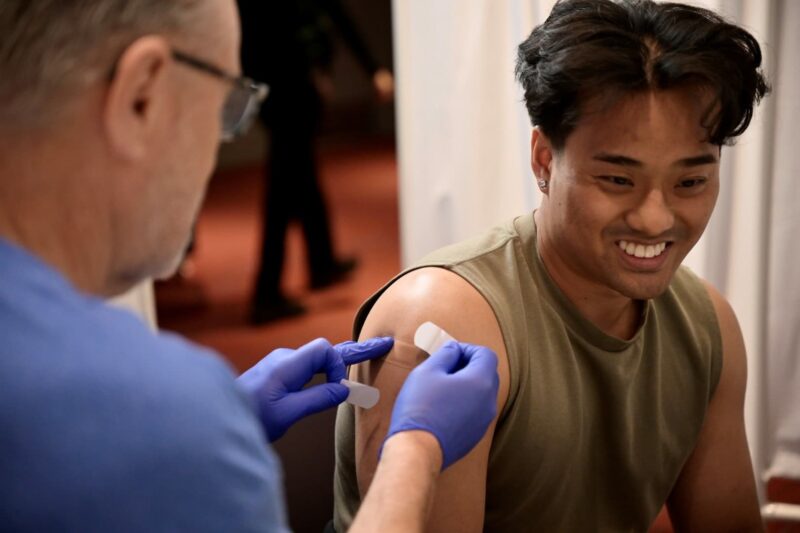
    Free Health Clinic Draws 18-Hour Overnight Line at Seattle Center

    The Seattle/King County Clinic ran its 11th annual four-day event at Fisher Pavilion April 23-26, offering free dental, vision, and medical care with no documentation required. On opening morning, people had been in line since 11 a.m. the day before — an 18-hour wait — and dental admission tickets were gone within 10 minutes of the 5:30 a.m. opening. Vision and medical slots followed within hours. Organizers project the 2026 clinic will serve 3,000 to 3,500 patients across four days, roughly matching last year’s final count of 3,300.

    Who Comes and Why

    The clinic’s patient population spans the full range of the coverage gap: the uninsured, the underinsured, and people whose coverage exists on paper but not in practice. Lisa Beck, a Marine veteran, said she hadn’t seen a dentist in over a decade; she described the clinic’s first-come, first-served model as a genuine point of access. Jeff Allison has dental insurance, but his deductible is high enough that using it isn’t financially worth it. For patients like Gabriel Mayorga, the clinic is not supplemental — it is primary care. “It’s become my main source of medical care,” Mayorga said, “because it’s the only thing I can afford.” More than 3,000 licensed clinical and non-clinical volunteers staff the event annually, donating an estimated 40,000 hours of labor. All services are free; all supplies are donated.

    Growing Need, Shrinking Safety Net

    The clinic launched in 2014 during early ACA optimism, and organizers at the time expressed hope it might eventually become unnecessary as coverage expanded. That has not happened. Approximately 40,000 Washington residents lost health insurance in the year before the 2026 event, and the clinic has served more than 33,000 patients since it opened. HR1, signed in July 2025, cuts roughly $1 trillion from federal Medicaid over 10 years and imposes 80-hour-per-month work requirements on the 620,000 Washington Apple Health enrollees between the ages of 19 and 63, effective December 31. “What we’ve seen 11 years later is that the need is only growing,” said organizer Olivia Sarriugarte. The 12th clinic is expected in April 2027.

    Transportation

    Wilson Commits $4M to Denny Way Bus Lanes and I-5 Ramp Reroute

    Mayor Katie Wilson announced Wednesday a $4 million project to install dedicated bus lanes along Denny Way and permanently reroute drivers seeking southbound I-5 access — a specific campaign promise from the 2025 mayoral race. Construction begins in May on the Queen Anne to downtown segment; a second phase covering nine blocks on the Fairview-to-5th stretch begins in August. The project is funded by the voter-approved Seattle Transportation Levy and targeted for completion in fall 2026.

    The Project

    The two-phase work adds Business Access and Transit lanes on approximately 12 blocks of Denny Way. The structural centerpiece is the permanent closure of the Yale Avenue slip lane — a cut-through at Denny Way and Stewart Street where I-5-bound cars queue across the bus lane. Drivers will be rerouted via Boren Avenue and Howell Street. SDOT tested the reroute during a temporary spring 2026 closure and found consistent peak-hour traffic volumes with some off-peak shifts before committing to permanent closure. Construction pauses from June 8 through July 9 for the FIFA World Cup.

    The Route’s Record

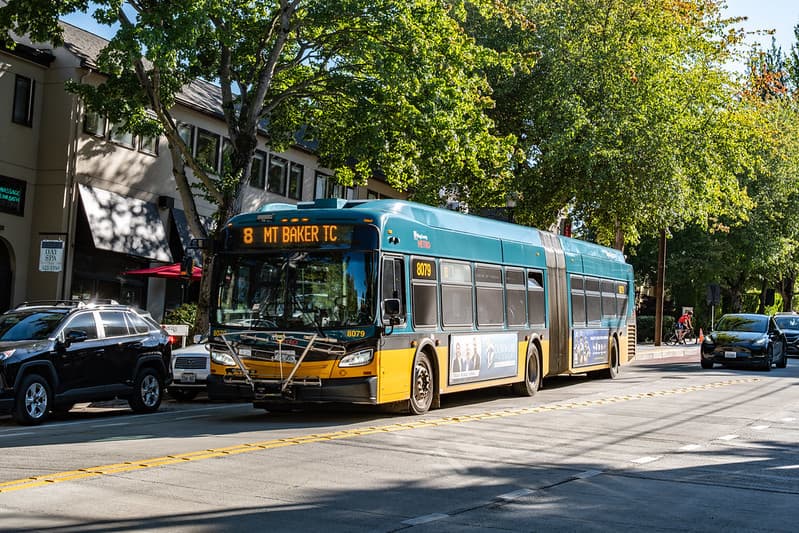
    Route 8 carries approximately 7,000 to 8,000 riders daily between Capitol Hill, South Lake Union, and Uptown — one of King County Metro’s top ten routes by ridership. Its on-time rate was below 58 percent of stops as recently as 2023; it reached 77.8 percent by March 2026 following earlier lane work. A November 2025 count found 321 Route 8 riders traveling eastbound each hour during the afternoon peak, compared to 396 drivers heading to southbound I-5. Starting August 29, Route 8 frequency increases from every 15 minutes to every 12 minutes, funded separately by the Seattle Transit Measure.

    The Delivery

    Wilson signed an executive order directing SDOT to develop the bus lane plan two weeks into her term, in January 2026, setting an April 17 deadline. The previous administration had declined to add lanes during a 2024–2025 repaving of Denny Way and formally ruled out the Fairview-to-5th stretch in August 2025, citing a study projecting 17 to 34 additional minutes of peak-hour car travel time. Wilson replaced the SDOT director who made that ruling. Fix the L8 — a grassroots coalition pushing to make Route 8 reliable — began campaigning for bus lanes on this corridor in 2009. “Since 2009, we’ve had six mayors,” said co-founder Nick Sattele at the April 22 announcement. “Six mayors that haven’t acted on making Route 8 fast, frequent and reliable.”

    By the Numbers

    $15.98/hr

    Seattle gig worker average pay — 18 months after the minimum pay law

    A city report found app-based delivery workers averaged $15.98 per hour since Seattle’s minimum pay ordinance took effect in January 2024 — up from as low as $3.17 before the law. The report covers 92,000 workers and 15 million offers.

    270

    Washington's gray wolf count

    The state’s 2025 survey confirmed 270 wolves across 49 packs — the highest tally since annual monitoring began in 2008, up 17% from 230 wolves the prior year. Twenty-three packs were confirmed breeding pairs.

    4

    Washington state campgrounds closing this year after lawmakers cut $8M from DNR recreation

    Anderson Lake (Elbe), Rock Lakes (Conconully), and Upper Clearwater (Forks) close for the season; Island Camp (Glenwood) loses overnight use but keeps day-use access. Two consecutive years of cuts also ended a Conservation Corps partnership that previously fielded the equivalent of 70 staff.

    Around Town

    Ballard

    Dozens of California sea lions have settled onto the docks at Shilshole Marina and the nearby floats at Golden Gardens Park. Researchers say the outer-coast population has hit carrying capacity and is pushing into the Salish Sea to follow herring runs. Wildlife officials are asking visitors to keep their distance: a sea lion bite can cause serious infection. The colonization is, by most accounts, a sign that the population is recovering.

    Waterfront

    The MS Eurodam sailed from Pier 91 on Saturday, opening Holland America’s 2026 Alaska cruise season. The Port of Seattle expects a record 330 ship calls and 2.1 million revenue passengers across the summer, generating an estimated $1.2 billion in regional economic activity.

    Pioneer Square

    Six times this summer, Pioneer Square will go car-free. SDOT confirmed this week that the blocks surrounding Lumen Field will become a pedestrian zone on each of Seattle’s FIFA World Cup match days, with big-screen watch parties, a beer garden, and street programming on First Avenue South between South King and South Main Streets. The city expects 100,000 people in and around the stadium on each match day and 750,000 total visitors across the six-week tournament. The first Seattle match is June 15.

    Skyway

    A decade of community organizing became a park last Saturday when Black Panther Park opened at Renton Avenue South and South 75th Street, the first public space in the region dedicated to the Seattle chapter of the Black Panther Party. Nurturing Roots founder Nyema Clark led the project, which was funded through King County participatory budgeting and conservation grants and features nine murals, a lending library, and a free-forage food forest — apple trees, blueberry bushes, strawberries, and herbs that anyone can pick.

    Photos

    On the Web

    Amazon Deepens Anthropic Ties With Up to $25 Billion Investment nytimes.com

    The ramifications of record-shattering heat on the West's ecosystems hcn.org

    More Washington homes come with HOA fees axios.com

    Top credit rating agency puts Washington on notice washingtonstatestandard.com

    UW physicists win 2026 Breakthrough Prize for study of enigmatic particle washington.edu

    On the Duwamish, Fishers Balance Salmon Runs, Polluted Waters, and Treaty Rights southseattleemerald.org

    Quoted

    They say that the road to hell is paved with good intentions. And the King County Regional Homelessness Authority was set up six years ago with the best of intentions, but the tool that was set up has been given more chances than it deserves at this point, and it has failed again and again and again.

    King County Councilmember Rod Dembowski

    At a Thursday joint press conference with Seattle Councilmember Maritza Rivera announcing companion resolutions to dissolve the regional homelessness authority following a forensic audit that found $13 million in public funds unaccounted for and a $44.7 million negative cash position.

    ← Previous
    Issue No. 024 April 20, 2026

    © Metropoltica 2026. All rights reserved.
    Bring back the SuperSonics.

    UPC Code